
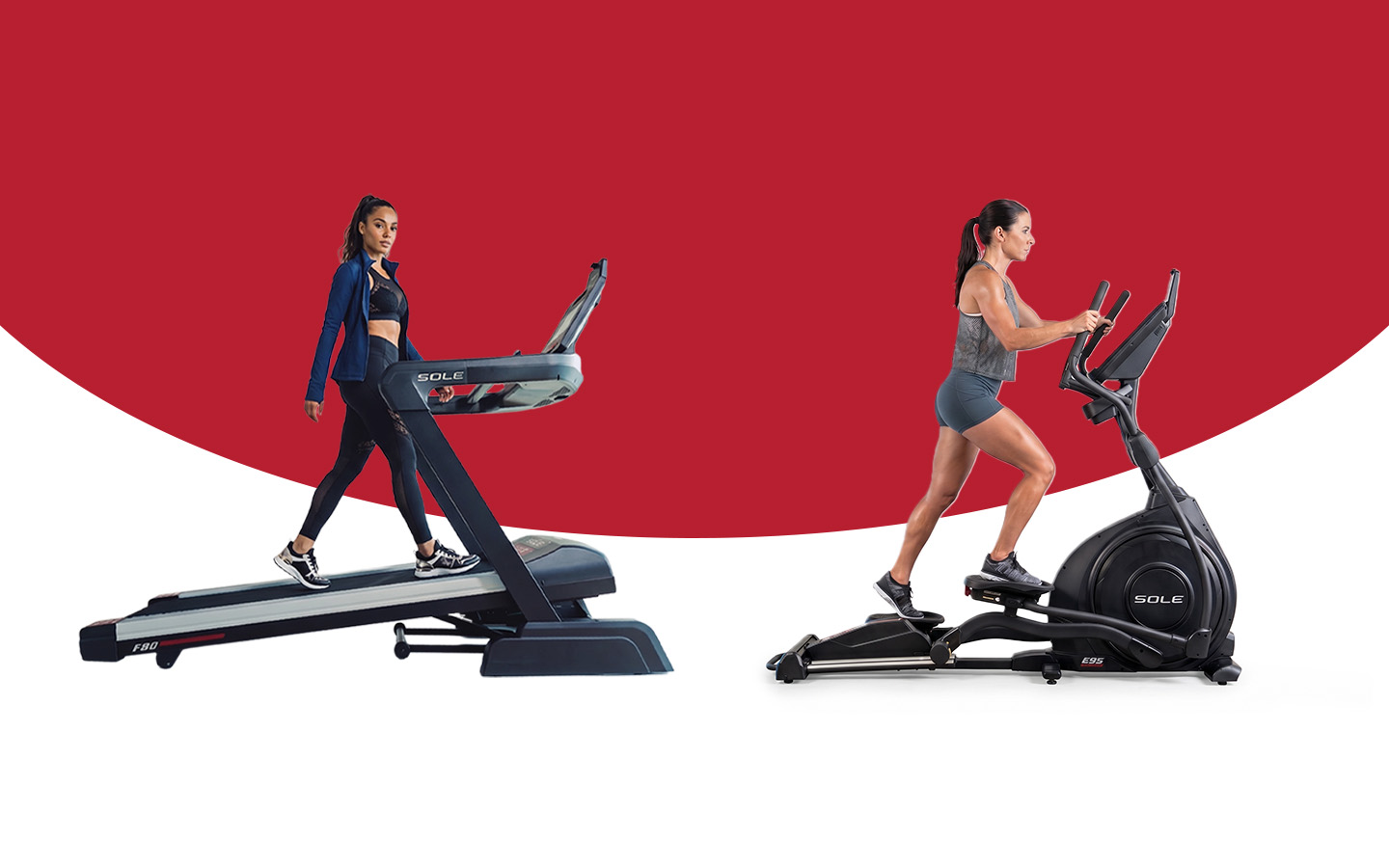
When comparing elliptical vs. walking for weight loss, both can be effective ways to increase physical activity and calorie expenditure. The better option depends on your workout intensity, fitness level, physical needs, and, most importantly, which activity you can perform consistently.
Elliptical training provides a low-impact workout that can engage both the upper and lower body, while walking is one of the most accessible forms of cardiovascular exercise. Increasing walking speed or adding hills and incline can also significantly increase workout intensity.
So, which one is better for weight loss? Let’s compare calorie expenditure, muscle engagement, joint loading, and overall workout versatility.
Key Takeaways
- Both elliptical training and walking can contribute to a more active lifestyle and support weight-management goals.
- Workout intensity has a major effect on calorie expenditure. Brisk or uphill walking can require considerably more energy than slow, level walking.
- Ellipticals can engage both the upper and lower body when the moving handlebars are used actively.
- Elliptical training generally produces lower vertical loading rates than walking, making it an appealing option for those looking for lower-impact cardio.
- The best choice ultimately depends on your goals, comfort, fitness level, and which type of exercise you are most likely to maintain consistently.
Elliptical vs. Walking for Weight Loss: Which Is Better?
We can tell you now: there is no universal winner.
An elliptical can provide an efficient full-body cardiovascular workout by combining lower-body movement with push-and-pull motion through the handlebars. Walking, meanwhile, requires little learning and can easily become part of your everyday routine.
Intensity changes the comparison significantly.
A relaxed walk may require considerably less energy than a moderate elliptical session. However, walking faster or adding hills can raise the energy demand substantially. According to the 2024 Compendium of Physical Activities, level treadmill walking ranges from 3.8 METs at 3.0–3.4 mph (4.8–5.5 km/h) to 5.8 METs at 4.0–4.4 mph (6.4–7.1 km/h). Moderate elliptical training is listed at 5.0 METs, while vigorous elliptical training is listed at 9.0 METs.
In other words, exercise type alone does not determine calorie expenditure. How hard you work and how long you exercise matter just as much.
How Many Calories Do Elliptical Training and Walking Burn?
Calories burned during exercise vary depending on body weight, workout intensity, speed, resistance, incline, fitness level, and other individual factors.
For a clearer comparison, the estimates below use the same reference body weight of approximately 154 lb (70 kg) and MET values from the 2024 Compendium of Physical Activities. The calorie figures are estimates rather than guaranteed individual results.
Estimated Calories Burned per Hour
| Activity | MET Value | Estimated Calories/Hour* |
| Treadmill walking, 3.0–3.4 mph / 4.8–5.5 km/h, level | 3.8 | ~280 |
| Treadmill walking, 3.5–3.9 mph / 5.6–6.3 km/h, level | 4.8 | ~350 |
| Elliptical trainer, moderate effort | 5.0 | ~370 |
| Treadmill walking, 4.0–4.4 mph / 6.4–7.1 km/h, level | 5.8 | ~425 |
| Hill walking, 6–10% grade, moderate-to-brisk pace | 7.0 | ~515 |
| Hill walking, 11–20% grade, slow-to-moderate pace | 8.8 | ~645 |
| Elliptical trainer, vigorous effort | 9.0 | ~660 |
*Estimates are calculated for a 70 kg adult using standardized MET values. Actual energy expenditure varies between individuals.
The 2024 Compendium classifies moderate elliptical exercise at 5.0 METs and vigorous elliptical exercise at 9.0 METs. It also shows how dramatically walking intensity can change with speed and grade.
This is why it is misleading to simply say that either walking or elliptical training “burns more calories.” A brisk uphill walk can require more energy than a moderate elliptical workout, while vigorous elliptical training can exceed typical level walking.
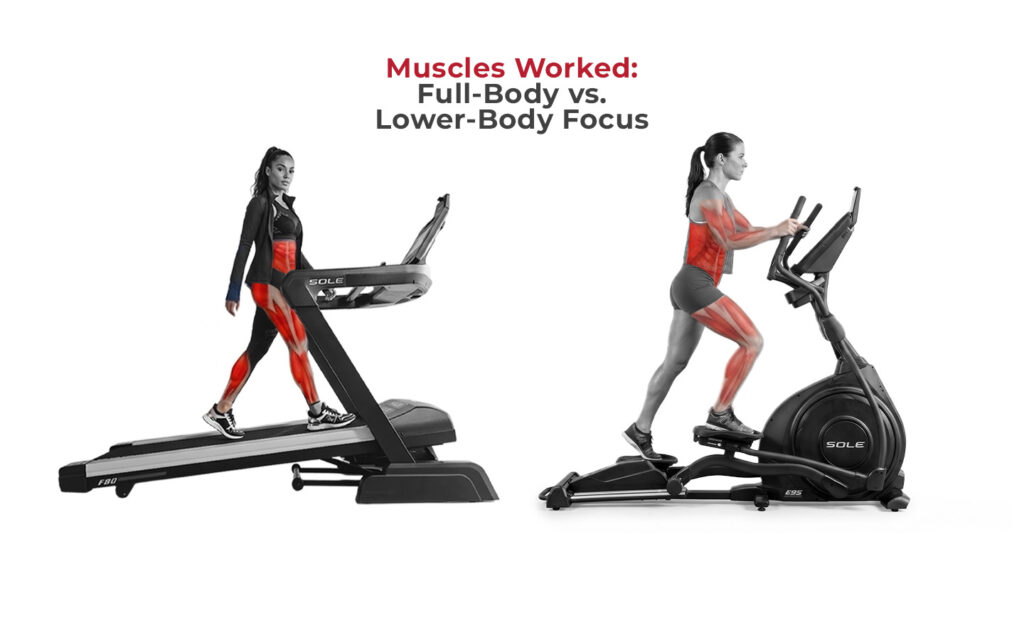
Muscles Worked: Full-Body vs. Lower-Body Focus
Another important difference is how the two movements recruit your muscles.
Elliptical Muscle Engagement
Elliptical training primarily involves the lower body, including the quadriceps, hamstrings, glutes, and calves. When the moving handlebars are used actively, the upper body also contributes to the push-and-pull motion.
Research comparing elliptical training with treadmill and overground walking has found particularly high quadriceps activity during elliptical exercise, along with greater quadriceps and hamstring coactivation than the other conditions tested.
Your core also helps maintain posture and stability throughout the movement.
This combination makes elliptical training useful for people who want cardiovascular exercise with more total-body involvement than conventional walking.
Walking Muscle Engagement
Walking primarily challenges the lower body, particularly the quadriceps, hamstrings, glutes, calves, and muscles involved in hip movement and stabilization.
As speed or incline increases, so does the challenge. Hill walking places greater demands on the lower body and also raises the overall metabolic intensity of the activity. The 2024 Compendium rates moderate-to-brisk hill walking at a 6–10% grade at 7.0 METs, compared with 3.8 METs for moderate level walking at approximately 3.0–3.4 mph.
Joint Loading: Elliptical vs. Walking
Both elliptical training and walking are commonly considered lower-impact cardiovascular options compared with running, but they are not identical.
Elliptical: Lower Loading
One advantage of an elliptical is that your feet remain supported by the pedals throughout the movement rather than repeatedly striking the ground.
A biomechanical study comparing elliptical exercise with level walking found that elliptical exercise produced lower vertical forces and loading rates than walking. This smooth, supported motion makes elliptical training an appealing option for people looking for lower-impact cardiovascular exercise.
Walking: Low Impact and Highly Accessible
Walking remains a relatively low-impact and highly accessible form of exercise.
Unlike elliptical training, however, every walking step involves contact between the foot and the walking surface. Speed, terrain, incline, footwear, body mechanics, and other factors can all influence how the movement feels.
For many people, both forms of exercise can fit comfortably into a regular fitness program. Individuals with an injury, joint condition, or other medical concern should consult an appropriate healthcare professional for advice specific to their circumstances.
Neither option needs to completely replace the other. Alternating between walking and elliptical workouts can add variety and help make a regular fitness routine easier to maintain.
Why Choose SOLE for Elliptical or Treadmill Walking?
Whether you prefer elliptical training or treadmill walking, SOLE Fitness Canada offers equipment that allows you to progressively adjust workout intensity.

SOLE E95 Elliptical: Premium Low-Impact Cardio
The SOLE E95 features a 27 lb (12 kg) flywheel, 20 resistance levels, and 20 power incline positions, allowing users to gradually adjust workout intensity.
Its 20″ (51 cm) stride length and oversized cushioned pedals are designed for comfortable movement. The pedals feature a 2-degree inward tilt, which aligns your ankles, knees, and hips into a natural posture. This ergonomic design may reduce joint stress, during your stride. The pedals on the SOLE E95 also feature 10 adjustment positions, while dual-action handlebars allow the upper body to contribute to the workout.
The E95 also includes a 13.3″ touchscreen, Bluetooth connectivity, wireless charging, screen mirroring, and compatibility with the SOLE+ App.
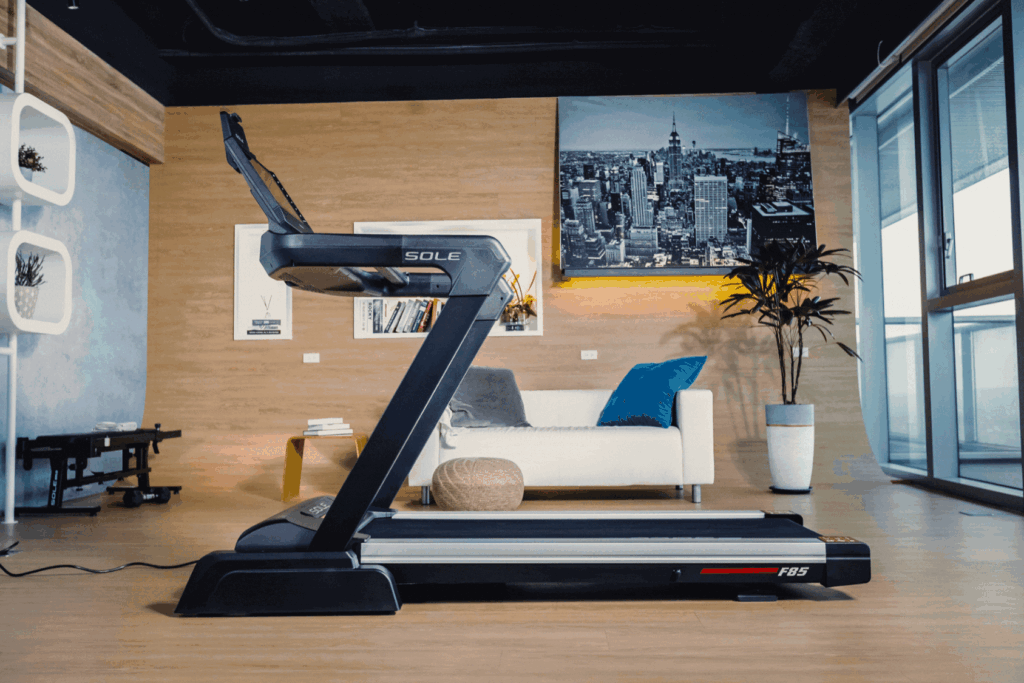
SOLE F85 Treadmill: More Training Variety with Incline and Decline
The SOLE F85 expands treadmill workout options with 15 incline levels and six decline levels.
It features a 22″ x 60″ (56 x 152 cm) Cushion Flex Whisper Deck, a 15.6″ touchscreen, and speeds up to 12 mph. Incline and decline settings allow users to vary the terrain and intensity of walking workouts without changing equipment.
The F85 also supports Bluetooth FTMS connectivity and compatible apps and wearables, including Garmin, Kinomap, and Strava.
Explore the full range of SOLE ellipticals and treadmills to find the right fit for your home fitness routine.
Frequently Asked Questions (FAQs)
Which is better for belly fat: walking or an elliptical?
Neither walking nor elliptical training can selectively target belly fat. Both can increase calorie expenditure and support overall fat loss as part of a consistent exercise and weight-management routine.
Can I lose weight by walking?
Walking can support weight loss by increasing daily physical activity and calorie expenditure. Increasing your walking pace, duration, or incline can make the workout more challenging, while nutrition and overall activity levels also play an important role in weight management.
How long should I use an elliptical or walk?
There is no single workout duration that guarantees weight loss. For overall health, Canadian guidelines recommend that adults get at least 150 minutes of moderate-to-vigorous physical activity per week.
Your individual workout duration can vary depending on intensity, fitness level, goals, and how consistently you exercise.
Does incline walking burn more calories than elliptical training?
It can. According to the 2024 Compendium of Physical Activities, moderate elliptical training is rated at 5.0 METs, while moderate-to-brisk hill walking at a 6–10% grade is rated at 7.0 METs.
However, calorie expenditure depends heavily on intensity. Vigorous elliptical training is rated at 9.0 METs, so neither activity always burns more calories than the other.
Is elliptical or walking better for beginners?
Both can work well for beginners. Walking is familiar and requires little adjustment, while elliptical training offers adjustable resistance and a smooth, supported movement.
Start at a comfortable intensity and gradually increase your workout duration or difficulty as your fitness improves.
Final Thoughts
Both elliptical training and walking can be valuable additions to a weight-management and fitness routine.
Elliptical training provides a smooth, lower-loading movement with the potential for both upper- and lower-body involvement. Walking offers simplicity and accessibility, while increased speed and incline can dramatically increase workout intensity.
Rather than asking which exercise burns the most calories in every situation, consider which option best fits your fitness level, physical needs, preferences, and routine.
With consistent activity and a workout intensity appropriate for you, both can play an effective role in helping you stay active and work toward your fitness goals.
Explore SOLE Fitness Canada’s ellipticals and treadmills and find the right equipment for your home fitness routine.
Disclaimer: Calorie figures shown in this article are estimates based on standardized MET values and should not be interpreted as exact individual calorie expenditure. Exercise needs and responses vary between individuals. Consult a qualified healthcare professional before beginning a new exercise program if you have an injury, medical condition, or other health concern.